
Mastering Counter-Strike 2 Smoke Grenades: Timing, Map Control, and Winning More Rounds
Introduction
Counter-Strike 2 (CS2) is a tactical first-person shooter where individual aim matters, but winning consistently requires much more than landing headshots. Every round is shaped by information, positioning, economy, utility usage, and the ability to make decisions under pressure. Among these factors, smoke grenades are particularly important because they can change how players see the battlefield, restrict enemy movement, and create opportunities for coordinated attacks. However, many players use smoke grenades reactively, throwing them only when they encounter an opponent or when they need to cross an exposed area.
This habit wastes one of the most valuable tactical resources in the game. A poorly timed smoke may block a teammate's vision, leave an important entrance uncovered, or disappear before the team is ready to move. By contrast, a well-planned smoke can isolate defenders, protect a bomb plant, delay a retake, or allow attackers to take control of a dangerous position without exposing themselves to multiple angles.
This guide explores one specific skill in depth: using smoke grenades to control space and timing in Counter-Strike 2. Rather than offering a general overview of the game, it examines the process from the opening seconds of a round through mid-round engagements, bomb-site executions, post-plant defense, and the final moments of a retake. It also explains common mistakes, practical training methods, and ways to adapt smoke usage to different team situations. Whether you play matchmaking, Premier, or organized team matches, understanding these principles can help you make each smoke more valuable.
1. Understanding How Smoke Grenades Work in CS2
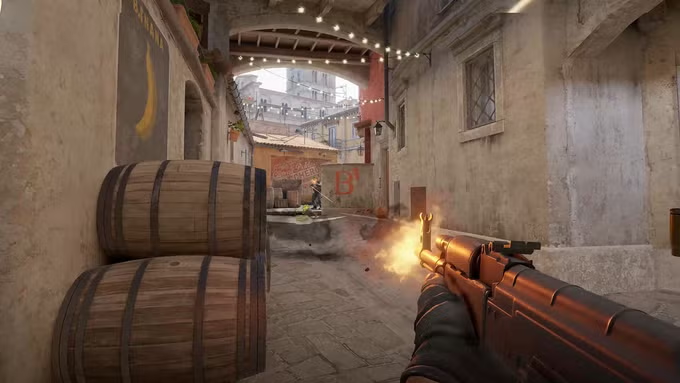
The first step toward mastering smoke grenades is understanding that Counter-Strike 2 does not treat smoke as a simple, flat wall. Valve introduced a dynamic volumetric smoke system that interacts with the surrounding environment, lighting, bullets, and explosions. The smoke can expand into available spaces, making its behavior more closely connected to the geometry of a map than a fixed visual effect. These changes make smoke placement and timing especially important for competitive players.
A smoke grenade has several tactical purposes. It can obstruct a sniper's sightline, hide a teammate crossing an exposed lane, prevent defenders from seeing an approaching attack, or make a bomb-site entrance safer to approach. However, smoke does not make a player invulnerable. Opponents can still fire through it, listen for footsteps, use utility to create temporary openings, or anticipate common movement patterns. A smoke should therefore be viewed as a tool for controlling information rather than as a guarantee of safety.
The Three Main Benefits of Smoke
- Vision denial: Prevents enemies from seeing clearly through important angles.
- Movement protection: Creates opportunities to cross dangerous areas or reposition.
- Information control: Makes it harder for opponents to determine exactly where your team is moving.
The most effective players understand all three benefits and choose their smoke placement according to the situation. Blocking an enemy's view is valuable, but blocking the correct view at the correct moment is what creates a genuine tactical advantage.
2. Planning Smoke Usage During the Opening Seconds
The opening seconds of a CS2 round determine which team gains access to valuable areas of the map. Terrorists may want to establish control of mid, pressure a long route, or approach a bomb site. Counter-Terrorists often try to gather information, hold aggressive positions, and identify the attackers' intentions. Using smoke too early without a clear objective can weaken your team's options later in the round.
Before the round begins, examine your team's weapon purchases, available grenades, and intended route. If your team plans to contest a central area, identify the angles that could punish the first player entering it. If your team intends to attack a bomb site directly, determine which defender positions must be blocked. This simple planning process prevents several teammates from throwing grenades at the same location while leaving another dangerous angle uncovered.
A Practical Opening-Round Checklist
- Identify the most dangerous enemy sightline along your intended route.
- Decide which teammate should carry the smoke needed to block it.
- Coordinate the smoke with the team's first movement or flashbang.
- Keep at least one alternative route available if the initial plan fails.
- Avoid throwing utility merely because the round has started.
For example, on Mirage, a team planning to contest mid may use a smoke to restrict the vision of defenders holding a central angle. That smoke can support movement toward connector or another route, depending on the team's strategy. However, the team should not assume that the smoke eliminates every possible threat. Defenders may still hold nearby positions, push through the cloud, or exploit an uncovered route.
The objective of early-round smoke usage is to establish control without spending unnecessary resources. A successful opening does not always require an immediate kill. Gaining safe access to an important area can force the opposing team to rotate, reveal defensive positions, or surrender valuable space.
3. Choosing the Right Smoke Placement for Map Control
Smoke placement should be based on what the enemy can see and do, not simply on where a grenade can land. Two smokes thrown in the same general area may produce different tactical results depending on the surrounding walls, entrances, elevation, and available movement routes. Players should learn the purpose of each lineup instead of memorizing a collection of throws without understanding their use.
Consider Mirage as an example. A smoke that blocks an important defender sightline can help attackers move through mid or approach a site from an additional direction. On Dust II, smoke can reduce exposure along long sightlines or help attackers cross toward a contested area. On Inferno, a well-timed smoke can delay opponents at a choke point and create room for teammates to advance. These are different tactical problems, even though the same grenade is being used.
How to Evaluate a Smoke Position
A useful smoke should answer at least one clear question:
- Which enemy position will lose its line of sight?
- Which teammate will be able to move because of the smoke?
- What alternative route becomes safer?
- How can the opponent counter the smoke?
- What will the team do when the cloud begins to disappear?
Example: Blocking an AWP Angle
Suppose an enemy sniper is holding a long corridor. Running directly into that angle forces your team to challenge the sniper's aim. A smoke placed across the relevant sightline can reduce the defender's ability to obtain a clean visual target. Your team can then reposition, use a flashbang to support a crossing, or approach through another route.
The smoke does not need to cover the entire corridor to be useful. Its purpose is to interfere with the defender's ability to observe and punish the intended movement. If the enemy changes position, the original smoke may become less effective, so your team must continue gathering information rather than blindly following the original plan.
4. Coordinating Smokes With Flashbangs and Other Utility
A smoke grenade becomes much more effective when it is part of a coordinated utility sequence. Throwing several grenades independently can create visual obstruction without producing meaningful progress. A coordinated sequence, by contrast, can restrict enemy vision, force defenders away from an angle, and allow teammates to move during the resulting disruption.
Flashbangs are particularly useful when players must cross or challenge an area where opponents may still be close to the smoke. A flash can reduce the defender's ability to react to an advancing player, while the smoke prevents other enemies from providing immediate visual support. Molotovs and incendiary grenades can also force opponents away from a position or temporarily restrict their movement, although their interaction with smoke and map geometry should be considered carefully.
A Simple Utility Sequence
- Preparation: Confirm the intended route and identify the main defensive angle.
- Smoke deployment: Block the sightline that presents the greatest immediate threat.
- Flash support: Use a coordinated flash when teammates are ready to move.
- Entry: Advance with sufficient spacing to avoid being stopped by a single defender.
- Follow-up: Use remaining utility to clear dangerous positions or protect the next movement.
Communication matters throughout this sequence. A teammate who throws a flash too early may allow defenders to recover before the entry begins. A player who crosses before the smoke has developed may become exposed. A delayed entry can waste the temporary advantage created by the utility.
It is also important to avoid excessive utility overlap. If a smoke already blocks the only relevant sightline, throwing another smoke in nearly the same location may provide little additional value. The second grenade may be more useful later, especially during a bomb plant or retake. Teams should evaluate utility according to the opportunities it creates rather than the number of grenades they can throw.
5. Using Dynamic Smokes Against Aggressive Defenders
One of the most important differences between traditional smoke habits and CS2's responsive smoke system is that the cloud can be affected by gunfire and explosions. Valve's official presentation of CS2 highlights how these interactions create temporary openings in smoke. This means that players should not assume a smoke will remain visually unchanged throughout its duration. Its tactical value can change when opponents actively interact with it.
For attackers, this creates a reason to remain alert even after a smoke has landed successfully. A defender may shoot through the cloud to obtain information or attempt to create a brief line of sight. An explosive can also disturb the smoke. If your team is relying on that cloud to cross an exposed area, it must be prepared for the possibility that visibility changes before everyone reaches safety.
Responding to Smoke Displacement
When an opponent fires through a smoke, avoid automatically returning fire at the same location without additional information. Repeated shots may reveal your position, waste ammunition, and allow the opponent to predict your response. Instead, consider whether the shots indicate a defender holding a common angle, an enemy attempting to stop a crossing, or an opponent using suppression to gather information.
A coordinated response may involve changing the crossing timing, using another flashbang, or waiting for a teammate to pressure the defender from a different angle. If the enemy uses an HE grenade to disturb the cloud, the temporary opening may create a dangerous window. Players should be ready to pause, reposition, or take advantage of the defender's commitment to that angle.
The same principles apply when defending against an attacking team. A smoke that blocks your preferred view does not mean you must abandon the position immediately. You can hold a nearby angle, listen for movement, coordinate with a teammate, or use utility to delay the attack. The important skill is adapting to the changing situation instead of treating the smoke as a permanent barrier.
6. Executing a Bomb-Site Attack With Smoke Timing
A successful bomb-site attack requires more than placing smoke grenades near the entrance. The team must coordinate its arrival, control the available angles, clear defensive positions, and establish a safe area for the bomb planter. If the smoke lands too early, it may expire before the team reaches the site. If it lands too late, the entry players may be eliminated before the intended protection becomes available.
The ideal timing depends on the distance between the throw position and the site, the time needed for teammates to move, and the defenders' ability to contest the route. Teams should practice the entire sequence rather than learning the grenade lineup in isolation. A lineup that works perfectly in an empty server may fail in a live round if the thrower is delayed or the team changes its approach.
Breaking Down the Site Execute
The first stage is to isolate the most dangerous defensive sightlines. The next stage is to create a controlled entry, often supported by flashes or other utility. Once attackers enter the site, they need to clear close positions and avoid clustering around the same doorway. Finally, the team must establish enough control to plant the bomb and prepare for the retake.
Consider an attack on Inferno's B site. Smoke can help restrict defenders' vision around an important entrance or defensive position while teammates use additional utility to pressure the site. The entry players must still check close angles and account for defenders who may remain behind cover. If the team focuses only on the smoke, it may overlook a defender positioned where the cloud provides no protection.
What Happens After the Plant?
Once the bomb is planted, the purpose of smoke changes. Before the plant, the team uses utility to enter and secure space. Afterward, the team should use its remaining resources to make the retake difficult, protect important post-plant positions, and preserve enough distance or cover to avoid being eliminated together.
Players should avoid automatically throwing every remaining smoke after the plant. A grenade may be more useful when defenders begin their approach or when a teammate needs to rotate to a safer position. The best decision depends on the bomb location, the remaining time, the number of surviving players, and the opponents' likely routes.
7. Defending Against Smoke-Based Attacks
Counter-Terrorists often make the mistake of treating a smoke as proof that an attacker is approaching through the blocked route. Although the smoke may indicate pressure, attackers can use it as a distraction while sending teammates through another area. Defenders who commit too early to a single interpretation can leave the opposite site or an important rotation route vulnerable.
A stronger defensive response combines observation, sound, positioning, and communication. If several attackers are detected near a choke point, teammates should share that information while remaining aware of other routes. The defender holding the smoked area may reposition to a nearby angle rather than attempting to see through the cloud. Another player may cover a possible crossing, while a third prepares to rotate if the attack develops.
Defensive Rules for Smoke Situations
- Do not assume the entire enemy team is behind one smoke.
- Avoid repeatedly firing through smoke without a tactical reason.
- Communicate footsteps, grenade sounds, and confirmed enemy positions.
- Maintain crossfires without standing so close together that one grenade affects both players.
- Preserve an escape route when holding a vulnerable position.
A smoke can also be used to disguise a defensive reposition. For example, a defender may move away from a predictable angle while the cloud blocks the attacker's view. This can prevent an opponent from immediately confirming whether the position is still occupied. However, the defender should avoid making unnecessary noise or moving into a location where retreat becomes impossible.
The central principle is that defense requires patience. The enemy wants you to react to incomplete information. By holding a disciplined position, sharing information, and delaying commitment until the attack becomes clearer, your team can avoid giving away easy advantages.
8. Managing Smokes During Post-Plant Situations
Post-plant rounds are often decided by seconds, positioning, and the ability to make the opponent approach through unfavorable angles. Once the bomb is planted, attackers need to protect the objective while defenders attempt to retake the site and defuse it. Smoke grenades can influence this phase by blocking sightlines, supporting repositioning, and making it harder for opponents to coordinate their approach.
However, smoke should not be used without considering the bomb's location and the likely defuse position. A cloud that blocks a useful attacker angle may also obstruct a teammate who needs to watch the bomb. Similarly, a smoke that helps one player retreat may allow another opponent to enter the site unseen. The value of the grenade depends on the positions of all surviving players, not just the thrower's immediate safety.
Choosing Between Holding and Repositioning
If your team has several players alive, it may be beneficial to maintain different angles around the bomb site. Smoke can reduce the number of sightlines that each player must watch, but teammates should remain ready to respond if an enemy pushes through the cloud. If only one attacker survives, the priority may shift toward preserving life and forcing the defenders to spend time checking multiple possibilities.
Defenders attempting a retake should also account for the remaining smoke duration. Rushing directly through a smoke may be necessary in some circumstances, but it can expose the player to close-range engagements. In other situations, using a flashbang or approaching from a different route may offer a better chance of success. The correct choice depends on the bomb timer, the available utility, and the number of opponents remaining.
Post-plant smoke usage is ultimately about controlling the defender's options. A well-placed grenade may delay a push or make a dangerous angle harder to hold, but it cannot replace good positioning and communication. Players must continually reassess the situation as the bomb timer decreases.
9. Common Smoke Mistakes and How to Correct Them
Many players know several useful lineups but still struggle to turn their utility into round wins. The problem often lies in how they use the grenade rather than where they throw it. Understanding common mistakes helps players identify why a seemingly correct smoke failed to create an advantage.
One frequent mistake is throwing smoke too early. The cloud may disappear before teammates reach the intended position, leaving them exposed during the most important part of the attack. Another mistake is using smoke without coordinating the entry. If the first player moves too soon or teammates hesitate, the team loses the timing advantage. A third mistake is failing to consider what happens when the smoke is disturbed by gunfire or an explosion.
Five Mistakes Worth Eliminating
- Throwing without a clear purpose: Every smoke should block a relevant sightline, protect movement, or support a specific tactical action.
- Ignoring teammates: A smoke can interfere with friendly vision or block a route that teammates intended to use.
- Repeating predictable timings: Opponents can learn when your team usually crosses and prepare to contest the cloud.
- Forgetting the next stage: Entering a site is not enough if your team cannot plant, defend the bomb, or survive the retake.
- Relying on outdated lineups: Updates and map changes can alter grenade behavior or the geometry of a familiar position.
Reviewing Failed Rounds
After a failed round, ask three questions: Did the smoke block the intended angle? Did the team move at the correct time? Did the smoke create an opportunity that the players failed to use? These questions help distinguish a mechanical problem from a coordination problem.
For example, if a smoke lands correctly but the entry player waits too long, the lineup may be fine. The team may instead need clearer communication. If the smoke repeatedly leaves a gap in an important sightline, the lineup or intended position may need to change. Reviewing the actual cause of failure is more useful than simply throwing the same grenade again and hoping for a different result.
10. Building a Consistent Smoke-Training Routine
Improving smoke usage requires deliberate practice. Playing matches alone may expose you to many situations, but it does not guarantee that you understand why a particular grenade worked or failed. A structured routine helps you separate mechanical execution, tactical timing, and decision-making so you can improve each skill independently.
Start by choosing one competitive map and identifying two or three important smoke positions. Learn the intended landing area, the sightline being blocked, and the movement the grenade is supposed to support. Then practice the lineup repeatedly in a suitable private practice environment. Once you can reproduce it consistently, introduce a simulated entry sequence involving movement, flashes, and teammate positioning.
A Four-Stage Practice Plan
Stage 1: Learn the lineup. Focus on the starting position, aiming reference, and throw technique. Confirm that the smoke reaches the intended area.
Stage 2: Understand the purpose. Move to the positions the smoke is meant to support. Check which angles are blocked and which threats remain.
Stage 3: Add timing. Practice the movement that follows the throw. The goal is to reach the intended position while the smoke still provides useful cover.
Stage 4: Test realistic scenarios. Practice against opponents who hold different angles, delay their push, or attempt to disturb the smoke. Learn how to respond when the original plan no longer works.
Keep a short record of your results. You might track whether the smoke landed correctly, whether teammates crossed safely, whether the team gained the intended area, and whether the grenade remained useful during the next stage of the round. These observations provide more actionable information than simply counting successful throws.
Finally, revisit your training after major game updates or changes to the competitive map pool. Even if a familiar lineup still works, its tactical value may change when the surrounding geometry or smoke interactions are modified. Treat practice as an ongoing process rather than a task that can be completed once.
Conclusion
Smoke grenades in Counter-Strike 2 are most effective when players understand their purpose, timing, and limitations. They can deny vision, create safer movement opportunities, isolate defenders, support bomb-site attacks, and make retakes more difficult. However, their value depends on coordination and the team's ability to respond when the situation changes.
The most important lesson is to stop thinking of smoke as a simple visual barrier. Instead, treat each grenade as part of a larger tactical decision. Identify the sightline that needs to be blocked, determine which teammate benefits from the cloud, coordinate the next movement, and prepare for the possibility that the smoke will be disturbed or expire sooner than expected.
With focused practice, clear communication, and careful review of failed rounds, players can turn smoke usage from a basic mechanical habit into a reliable competitive skill. Mastering this one aspect of CS2 will not guarantee victory, but it can help your team take better fights, preserve valuable utility, and make more informed decisions throughout a match.